 English
 中文简体
中文简体 عربى
عربى Español

If you have ever watched a candy floss machine at a fair, you have probably wondered how a spoonful of plain sugar turns into a cloud of fine threads in under a minute. The answer is not chemistry magic. It is a simple combination of heat, centrifugal force and very fast cooling. Once you understand those three ingredients, the process is easy to picture, and far easier to control when the machine is sitting on your own counter.
The Core Principle: Melt the Sugar, Then Throw It
Sugar is a crystalline solid. Heated to roughly 186 °C, the crystals break down and the sugar becomes a thick, molten syrup. In a candy floss machine, that melting takes place in a small bowl-shaped part known as the spinning head, the rotor or the ribbon heater. A heating element sits inside or directly beneath it, so the sugar is always touching a hot surface.
The second ingredient is motion. The head spins at high speed, commonly between 3,000 and 3,500 rpm on a household unit and faster on a commercial one. Because the head rotates, molten sugar is pushed outwards by centrifugal force and squeezed through thousands of tiny holes in its wall. Each hole releases an extremely fine jet of liquid sugar, roughly the width of a human hair.
The third ingredient is air. The moment those jets leave the head, they meet room-temperature air and cool almost instantly. The sugar has no time to recrystallise, so it hardens into thin, glassy strands. Those strands are light enough to float outwards and settle on the rim of the large bowl that surrounds the head, ready to be gathered on a paper cone or a stick.
What Is Inside the Machine?
From a small children's model to a stainless steel commercial unit, every candy floss machine uses the same set of components. What changes is their size, their power and the quality of their materials.
| Component | What it does |
|---|---|
| Heating element | Raises the spinning head to the melting point of sugar. |
| Spinning head | Holds the sugar and pushes the syrup through its perforated wall. |
| Motor and drive | Keeps the head turning at a stable speed so threads form evenly. |
| Collector bowl | Surrounds the head, catches the floss and keeps sugar off the table. |
| Heat control | Lets the operator fine-tune the head temperature and the flow of sugar. |
| Cover or canopy | Protects the operator, holds heat in and stops light floss from drifting away. |
| Base and feet | Keeps the unit stable at high rotation speeds. |
A good machine is a balancing act. If the head is hot but the motor is weak, the sugar melts faster than it can be thrown out and starts to burn. If the motor is strong but the head is cold, the sugar simply sits there as grains. This is why a sensible design matches heating power to head size instead of fitting the biggest motor available.
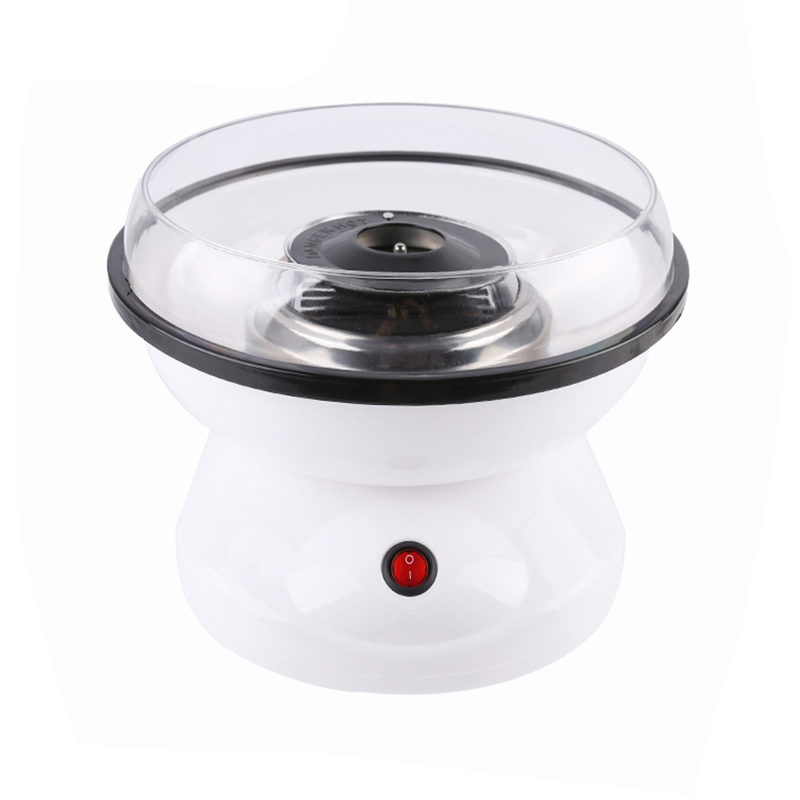
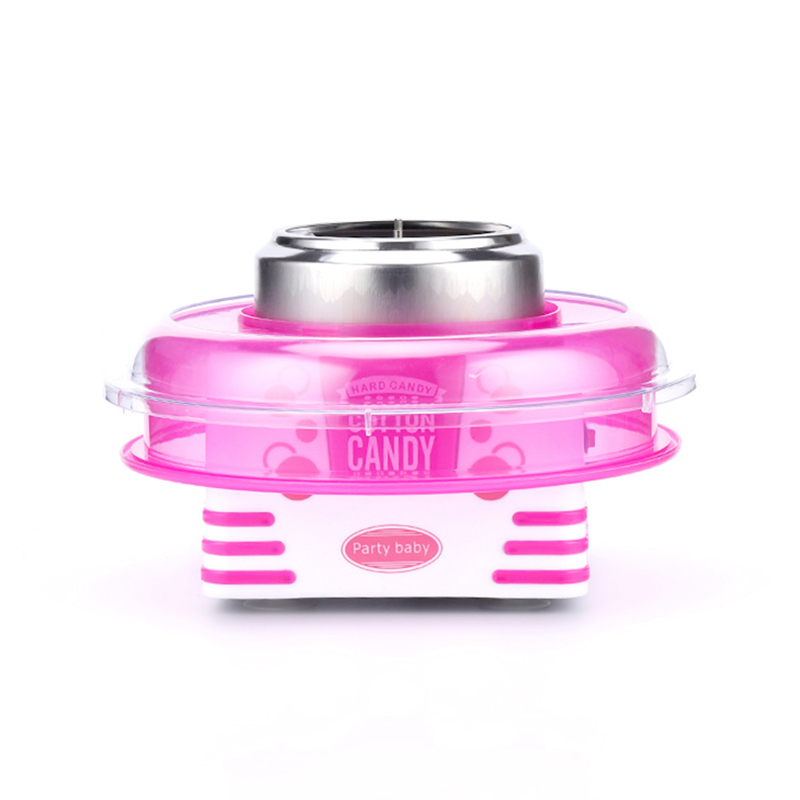
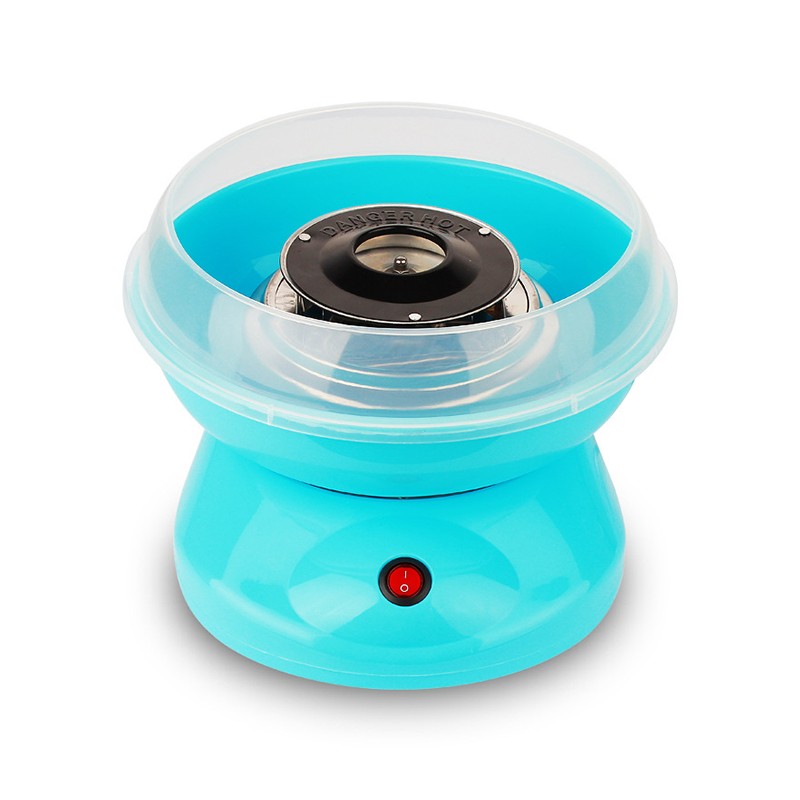
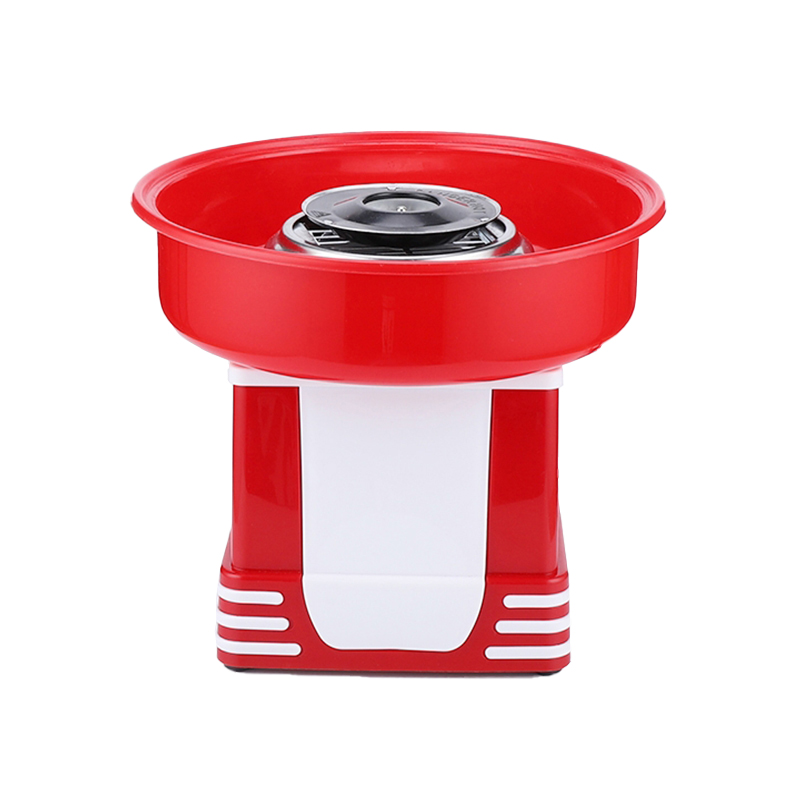
In our own cotton candy machine line, the spinning head and the collector bowl receive most of the engineering attention, because those two parts decide how fine the floss turns out and how easy the machine is to clean afterwards.
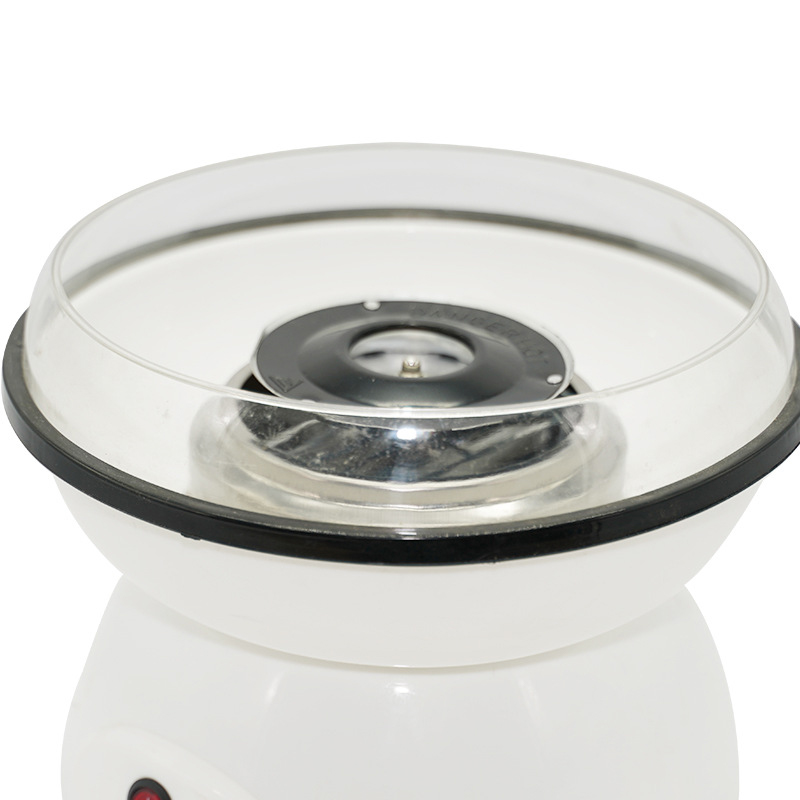 Stainless Steel Cotton Candy Machine Model Jk-M04 European Plugcotton candy machine model JK-M04 European plug 450-550W,3-5 minutes CE/ROHS/LFGB Certification and test reportView Product →
Step by Step: From Granulated Sugar to a Fluffy Cone
The sequence is the same whether you are running a compact countertop machine or a large commercial unit.
- Warm up. Switch the machine on and let the head heat for three to five minutes. Sugar added to a cold head will not melt; it will clump and scorch.
- Dose the sugar. Pour one level scoop of floss sugar or fine granulated sugar into the centre of the head. Overfilling is the most common beginner mistake, because the surplus cannot pass through the holes quickly enough.
- Watch it melt. Within seconds the sugar liquefies and the head begins to throw out fine streams.
- Catch the floss. Hold a cone or stick level with the bowl rim and rotate it slowly, moving around the bowl so the threads wrap on evenly.
- Build the ball. Keep twisting until the floss reaches the size you want, then lift the cone and give it a gentle turn to close the outer layer.
- Repeat. Add the next scoop only after the previous one has been fully spun out. An empty head runs clean; an overloaded head burns.
Why the Threads Are Glassy, Not Crystalline
The floss you eat is not ordinary sugar in a different shape. It is an amorphous glass. Sugar cooled that quickly cannot organise itself into crystals, so it locks into a random structure that scatters light in every direction, which is why the threads look white and opaque even though the starting sugar was transparent.
The same structure explains the texture. The strands are so thin that saliva dissolves them almost instantly, so the floss seems to vanish rather than crunch. It also explains why candy floss turns sticky so quickly: the glass is hygroscopic, meaning it pulls moisture out of the air and slowly returns to syrup. Serve it fresh, keep it in an airtight container, and think twice about making it in a steamy kitchen on a rainy afternoon. For a closer look at each stage, our team has prepared a longer explanation of how a cotton candy machine works from warm-up to finished cone.
Home and Commercial Machines: Same Idea, Different Muscles
The physics never changes, but the hardware does, and the differences matter when you are choosing a machine for a specific job.
| Feature | Home machine | Commercial machine |
|---|---|---|
| Power | Around 450 W | 1,000 W and above |
| Head and bowl | One small head, narrow bowl | Large head, wide bowl, sometimes twin heads |
| Warm-up | Three to five minutes | Five to ten minutes |
| Output | One cone at a time | Continuous production for a queue |
| Build | Light shell, easy to store | Stainless steel body, heavy-duty motor |
| Best for | Kitchens, parties, family events | Fairs, cinemas, rental businesses |
A 450 W home machine with a well-machined aluminium turntable will outperform a badly built unit with a higher wattage, because heat distribution across the head matters more than the number on the label.
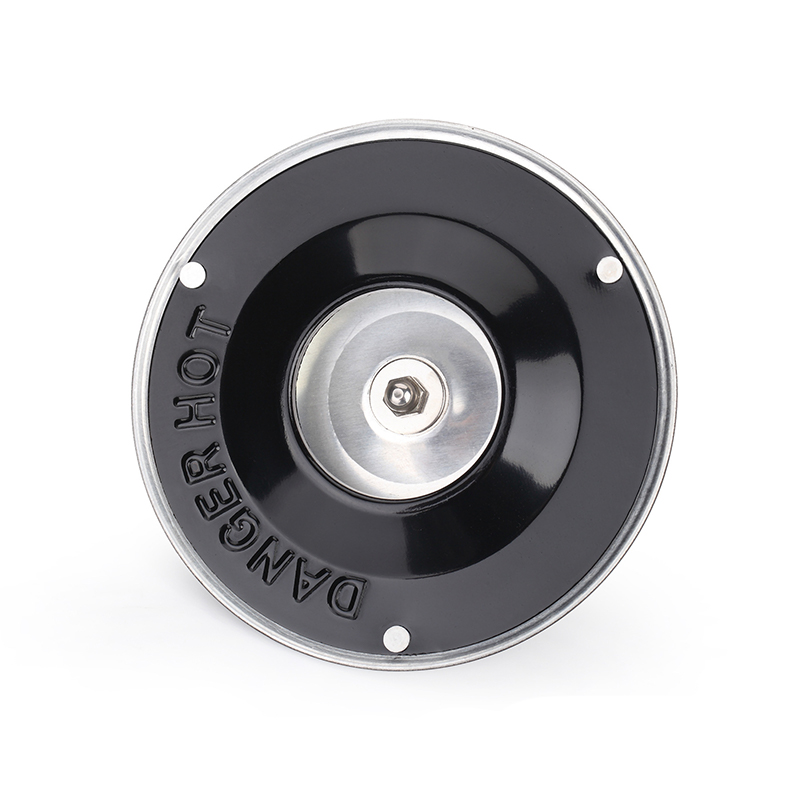 450W Aluminum Turntable Cotton Candy Machine Model JK-M05 European Plugcotton candy machine model JK-M05 European plug 450-550W, 3-5 minutes CE/ROHS/LFGB Certification and test reportView Product →
Sugar Choices and the Problems That Stop the Spin
Most "my machine does not work" complaints come down to sugar or technique rather than a faulty appliance.
- Granulated sugar works, but dedicated floss sugar blends are more consistent. They melt evenly and carry colour and flavour without clogging the head.
- Never use icing sugar or powdered sugar. These contain starch, which burns on the hot head and blocks the holes.
- Keep the sugar dry. Moist or clumped sugar jams the perforations and produces short, rough strands instead of a smooth web.
- Respect the humidity. On a damp day the threads absorb water before they reach your cone and collapse into sticky lumps.
- Clean the holes regularly. A soft brush and warm water restore full output; a pin or wire will widen the holes and ruin the head.
Cleaning and Care: Where Long Life Comes From
Sugar is water-soluble, so a candy floss machine is genuinely easy to maintain if you build the habit into every session.
- Unplug the machine and let the head cool completely before you touch it.
- Lift out the spinning head and soak it in warm water, then brush the holes gently until they are clear.
- Wipe the collector bowl with a damp cloth. Do not use abrasive pads on polished stainless steel.
- Never submerge the base, motor or control panel. Electronics and water do not negotiate.
- Dry every part thoroughly before the next use, and store the machine covered in a dry place so dust does not settle in the head.
Choosing a Machine That Fits Your Counter
For everyday family use, a compact unit with a 450 W motor, a single head and a bowl that lifts out for washing is all you need. If children will be operating it, look for a lower bowl, a stable base and a cover over the spinning head.
For a small business, prioritise a stainless steel body, a metal head that holds its temperature during back-to-back cones, and a motor rated for continuous running. Buyers who need a specific plug type, colour or packaging for their own market can also use our customize and design service to adapt a model to local requirements.
If the machine is meant for a child's birthday party or a family gathering, a lighter kids model with a smaller head is often the better fit, since it produces single portions at a comfortable pace.
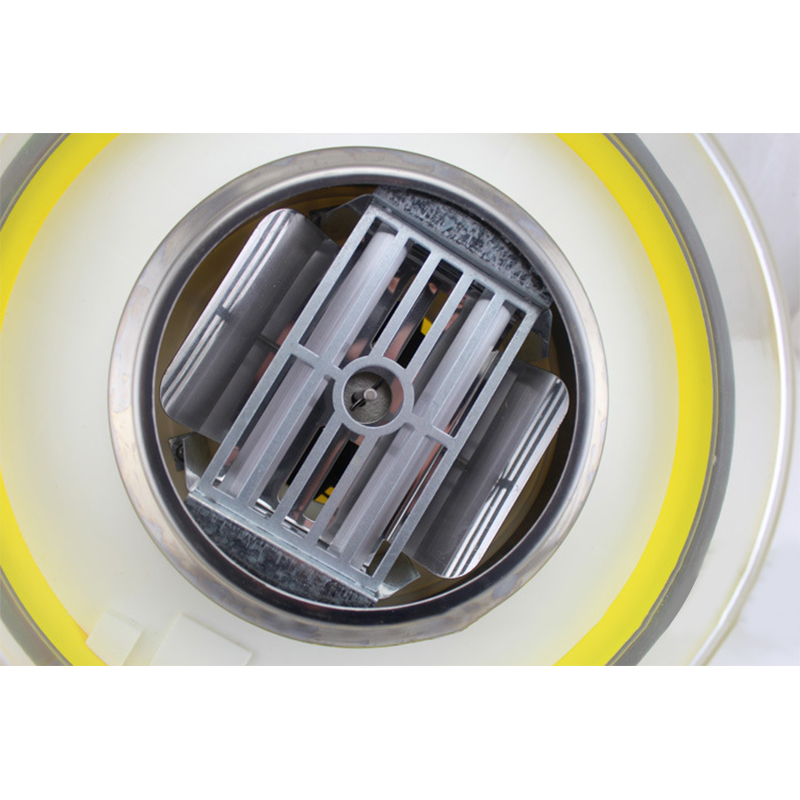 50/60HZ Aluminum Turntable Cotton Candy Machine Model JK-M03 European Plugcotton candy machine model JK-M03 European plug 450-550W, 3-5 minutes CE/ROHS/LFGB Certification and test reportView Product →
So how does a candy floss machine work? It heats sugar until it flows, spins that liquid through microscopic holes, and lets the resulting threads cool in mid-air before they ever touch a surface. Everything else, from the wattage on the label to the material of the turntable, exists to make those three steps more even, more reliable and easier to repeat. Understand the process and you will not only get better floss, you will also know exactly which machine deserves the space on your counter.