 English
 中文简体
中文简体 عربى
عربى Español

Every batch of movie-night popcorn starts with a kernel that looks completely unpromising: hard, dry, and barely bigger than a peppercorn. Yet inside that tiny seed sits a miniature pressure vessel waiting for its moment. As a manufacturer that has designed and built popcorn machines since 2010, we get asked one question more than any other: how does a popcorn machine actually work? In this guide, we will walk you through the physics inside the kernel, the engineering inside the machine, and the practical details that separate a bowl of fluffy popcorn from a pot of disappointed seeds.
The Science Inside Every Kernel
A popcorn kernel is not like other grains. Each one contains three essential parts:
- A hard, moisture-proof outer hull (the pericarp) that seals the inside like a tiny pressure vessel
- A starchy core that holds roughly 14 to 15 percent water
- A small germ, the living part of the seed
When the kernel is heated past about 180°C (355°F), the water inside the starchy core turns to steam. Because the hull is sealed, that steam cannot escape, and pressure climbs to roughly nine times normal atmospheric pressure, around 135 psi. Under this combined heat and pressure, the starch softens into a molten, gel-like state.
At the breaking point, the hull ruptures with the sharp "pop" you hear. The pressure inside drops instantly, the superheated starch expands into a foam up to 40 times its original size, and escaping steam inflates it into the familiar white cloud. Within a second or two, the foam cools and sets. This combination of a watertight hull and just the right moisture content is exactly why popcorn pops and ordinary grain does not.
Hot Air or Hot Oil: Two Ways a Machine Does the Job
Every popcorn machine, from the smallest countertop model to a cinema cart, has one mission: bring each kernel to popping temperature quickly and evenly. Engineers solve this in two main ways.
Hot Air Popcorn Machines
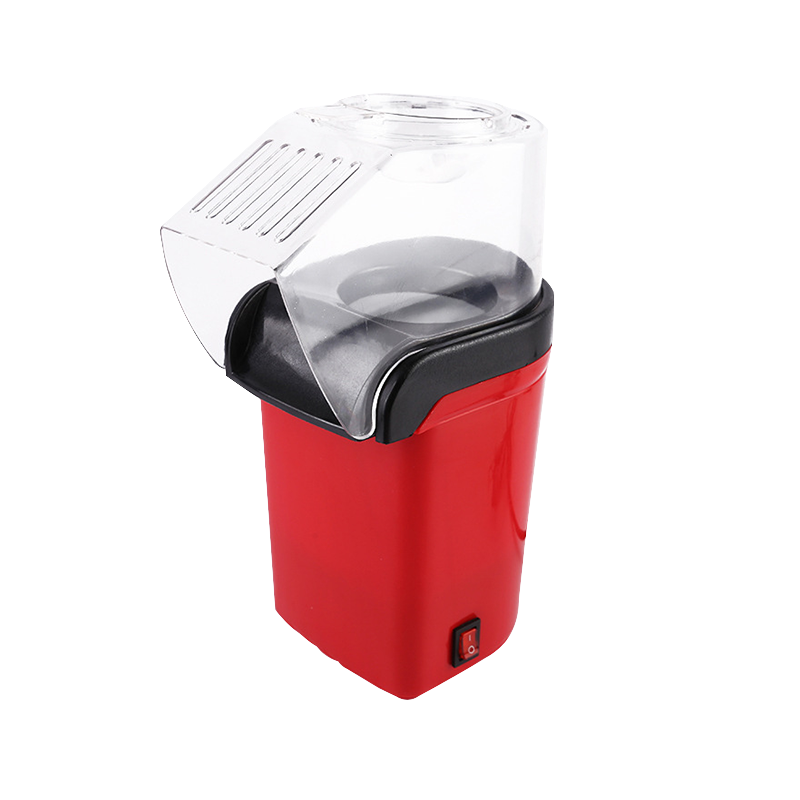
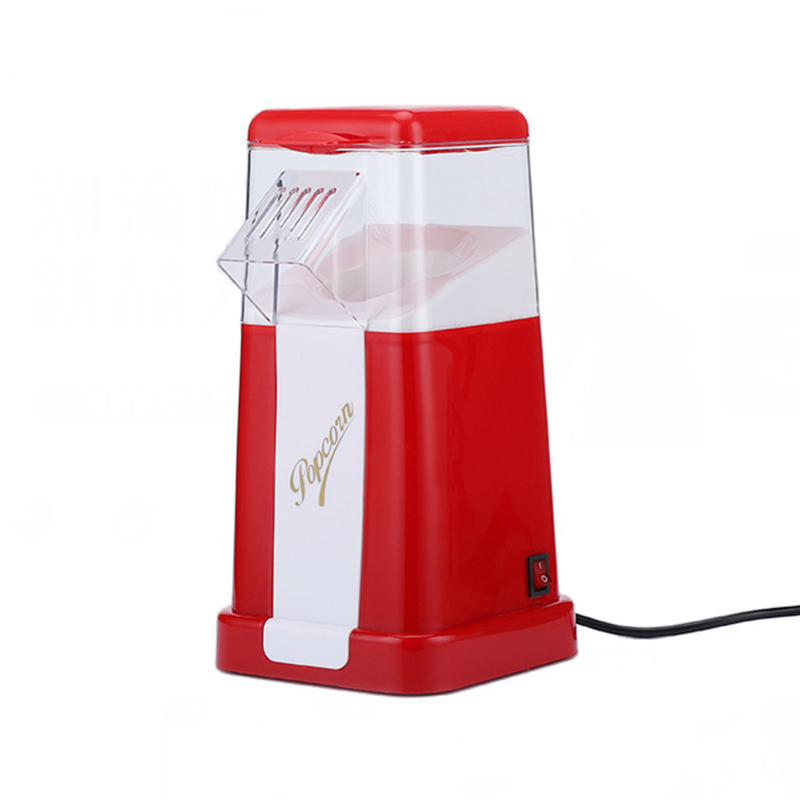
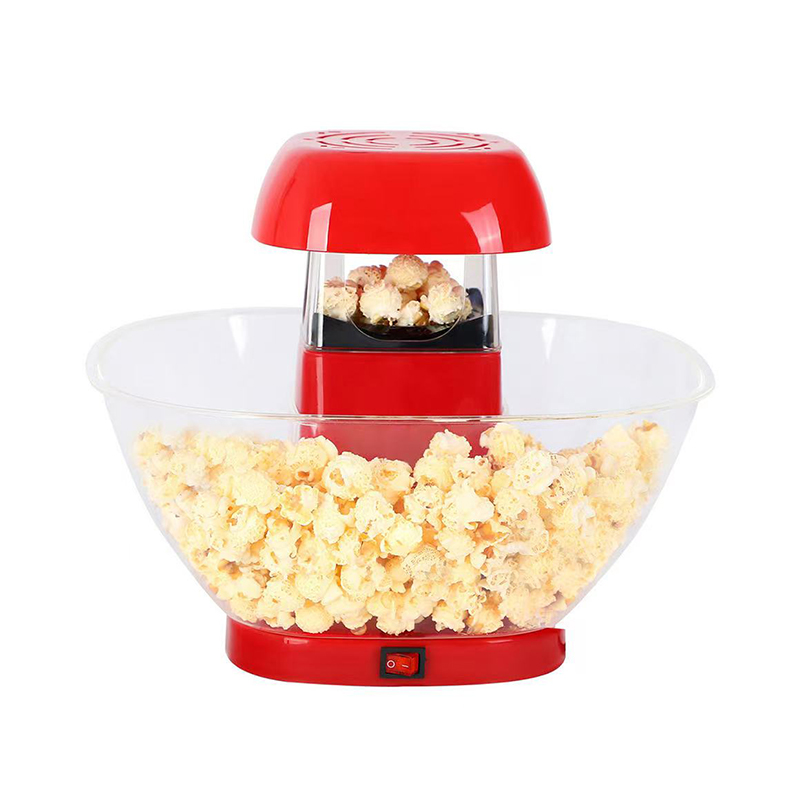
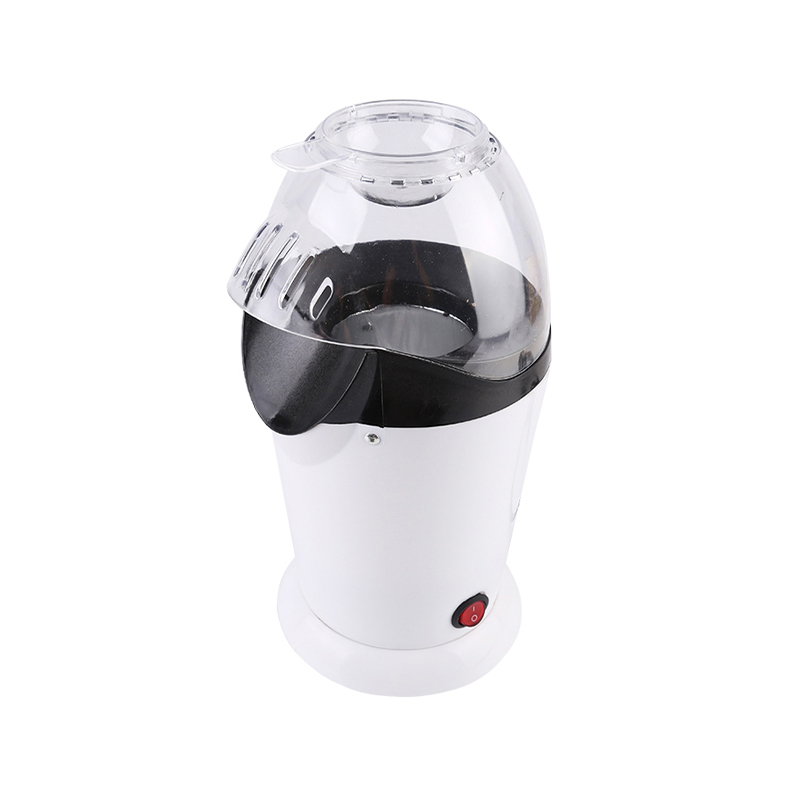
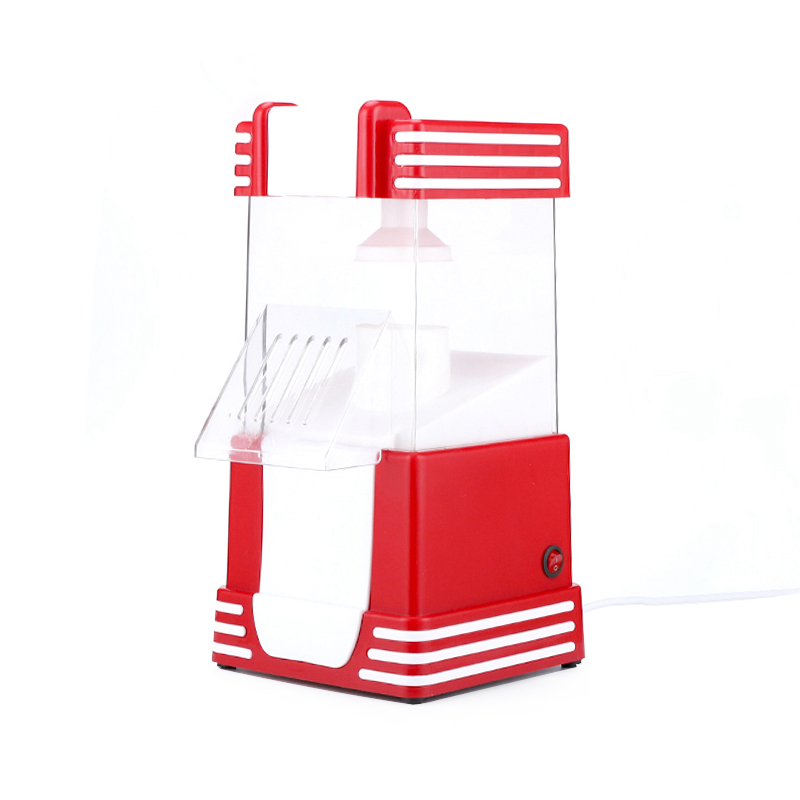
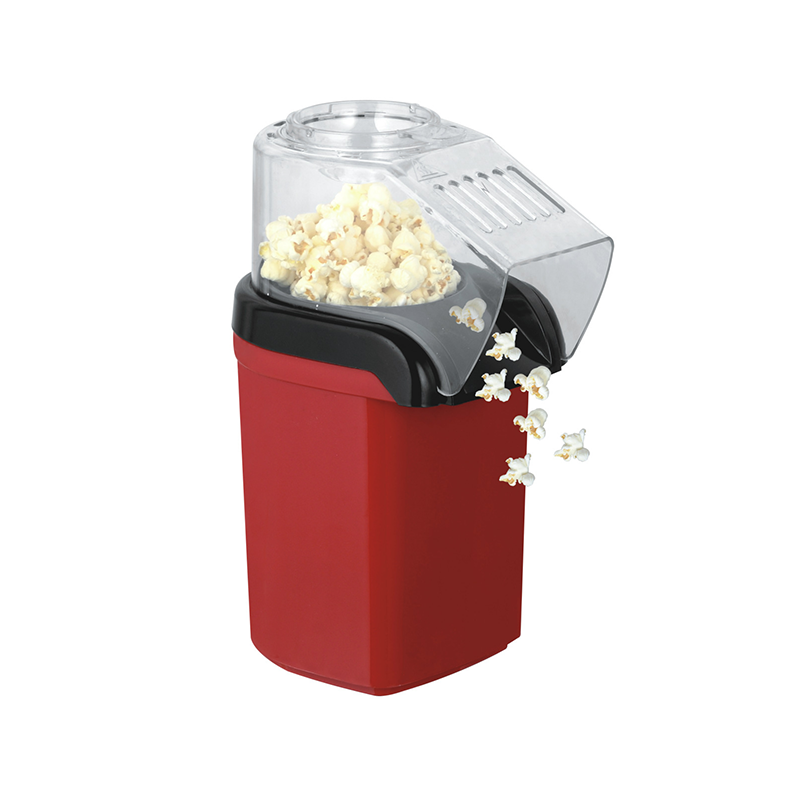
A hot air machine works a little like a hair dryer aimed at a handful of seeds. A heating element at the base warms the air, and a motor-driven fan pushes it up through the popping chamber at around 230°C. The kernels tumble constantly in this current, so every side is heated rather than only the side resting on a surface. Once a kernel pops, something clever happens: the fluffy popped corn weighs far less than the dense unpopped kernel, so the airflow lifts it up and out of the chute while unpopped kernels stay in the hot zone a moment longer. Because no oil is involved, this design is popular with families who want a lighter snack and an easier cleanup.
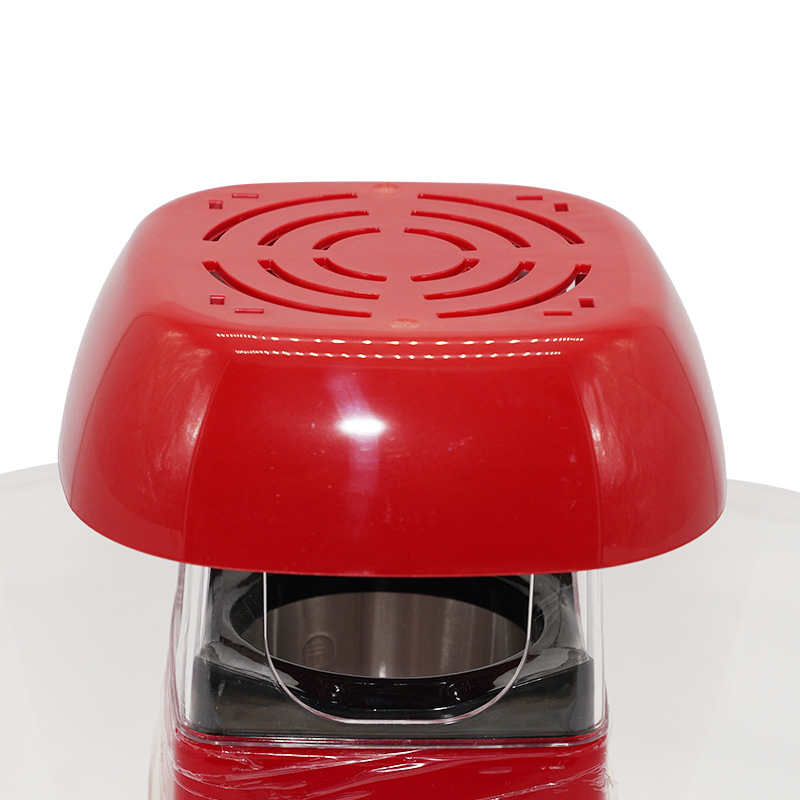 Health No oil hot air popcorn machine Model PM-1208 European plugpopcorn machine Model PM-1208 European plug 1200W 3-5 minutes Once Capacity 270ML No oil CE/ROHS/LFGB Certification and Test ReportView Product →
Oil and Kettle Popcorn Machines
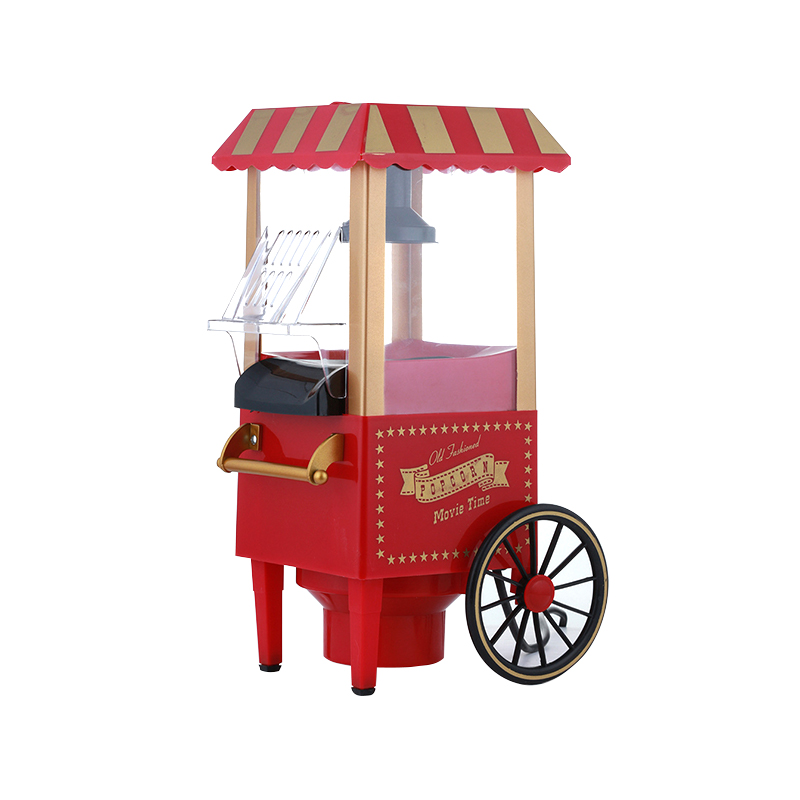
Kettle-style machines take a more direct route: they cook the kernels in hot oil inside a metal kettle or pan, usually aluminum, which conducts heat evenly across every surface. Oil transfers heat into the hull efficiently, and in larger kettles a motorized stirrer keeps the kernels moving so nothing scorches. The popped corn stays in the kettle until you pour it out, which is why this style delivers the rich, classic flavor people associate with the movie theater.
 Red Aluminum Pan Popcorn Machine Model PM-1200 European Plugpopcorn machine Model PM-1200 European plug 1200W, 3-5 minutes Once Capacity 270ML No oil CE/ROHS/LFGB Certification and Test ReportView Product →
If you are weighing the two designs against each other, our article on hot air and oil popcorn makers compares them in terms of flavor, health, and cleanup.
The Popping Cycle, Step by Step
Whether the machine heats with air or oil, a batch follows the same basic rhythm:
- Measure the right portion of kernels, plus oil if your model is a kettle type.
- Switch the machine on. A thermostat brings the heating element or kettle up to working temperature.
- Heat transfers into the kernels. In a preheated kettle the first pop arrives within seconds; in a hot air machine, within a minute or two.
- Popped corn is blown out through the chute or held in the kettle while the remaining kernels keep popping.
- When the pops slow to several seconds apart, switch the machine off and pour out the batch.
- Let the machine cool, then wipe the chamber, kettle, or pan clean.
A typical home unit finishes the whole cycle in two to three minutes, which is part of its charm: fresh popcorn is faster than driving to the store for a bag of chips.
Inside the Machine: The Key Components
Open up any popcorn machine and you will find the same short list of parts working together. Knowing what each one does also makes maintenance far easier.
| Component | What It Does |
|---|---|
| Heating element | Converts electricity into the heat that drives popping |
| Fan and motor | Push hot air up through the kernels in hot air models |
| Kettle and stirrer | Hold the kernels and oil, and keep them moving in kettle models |
| Thermostat and thermal cutoff | Hold the temperature in a safe range and protect against overheating |
| Popping chamber or kettle lid | Contain jumping kernels and guide popped corn toward the chute |
| Chute and tray | Direct finished popcorn out of the machine and catch stray pieces |
| Switch and indicator light | Give simple, dependable control over each batch |
Why Some Kernels Never Pop
Almost every batch leaves a few unpopped kernels at the bottom, and the machine is rarely to blame. Usually one of three things is happening:
- The hull is cracked or damaged, so steam leaks out and pressure can never build.
- The kernel has dried out below roughly 13 percent moisture, often because the bag was left open.
- The kernel is simply too small to hold enough water and heat to burst properly.
A handful of duds is normal, but if whole spoonfuls refuse to pop, the kernels are probably stale rather than the machine being faulty. Buying fresh kernels and storing them in a sealed jar in a cool, dry cupboard solves most of the problem.
How Home and Commercial Machines Differ
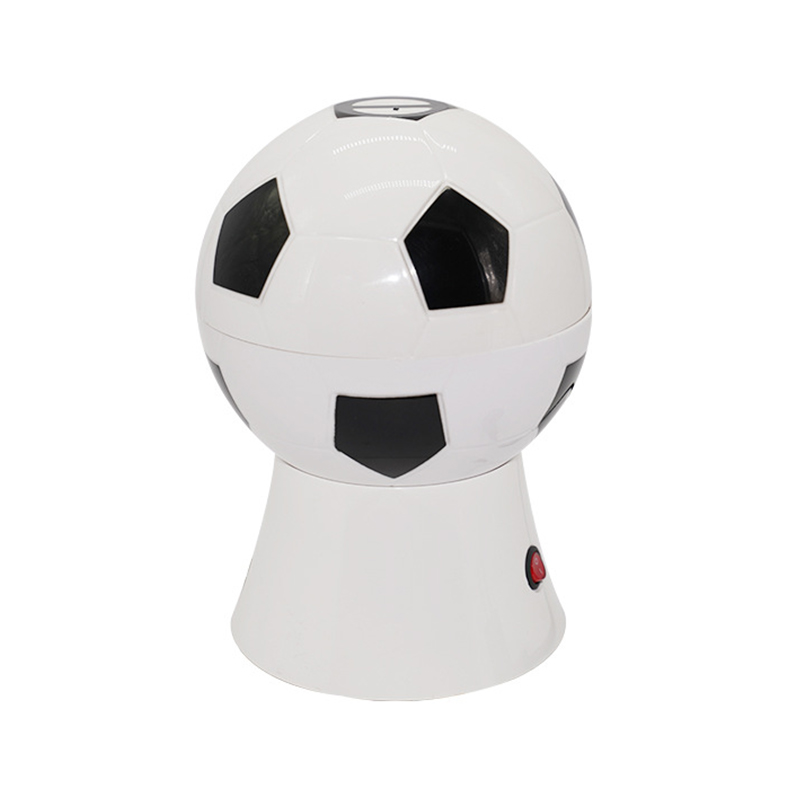
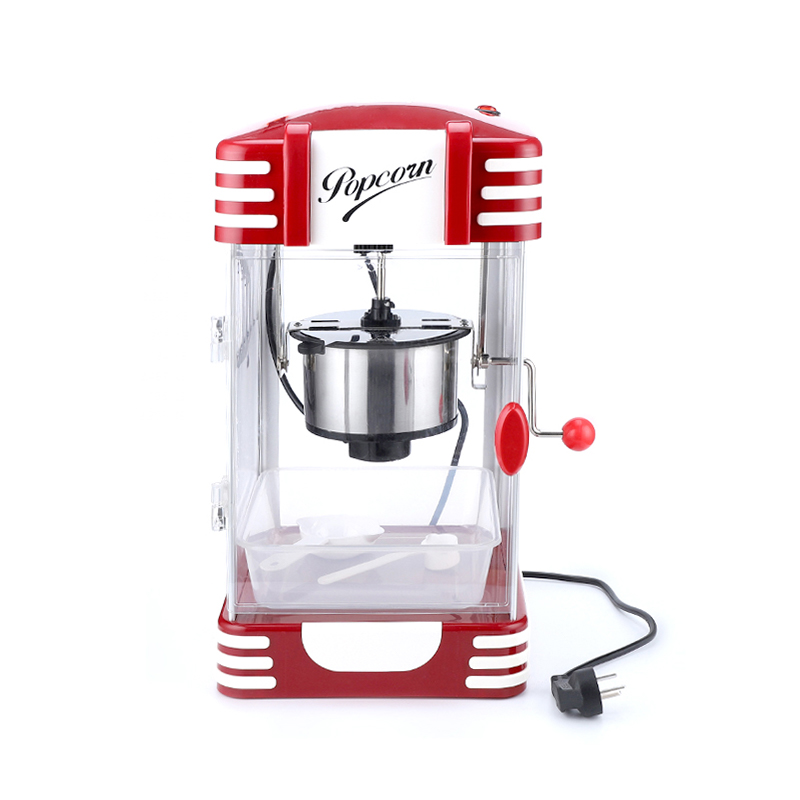
The working principle never changes, but the engineering around it changes with the workload. A home machine, typically in the 1200W class, is built for a batch or two at a time: it is compact, light, and often designed with a bit of fun, from transparent chambers that let children watch the popping to football-shaped shells that double as a party centerpiece. A commercial machine is built for an evening of continuous batches at a kiosk, cinema, market stall, or event. That means a larger kettle, higher wattage, a sturdier structure, and often a warming deck that keeps finished popcorn fresh under the lights.
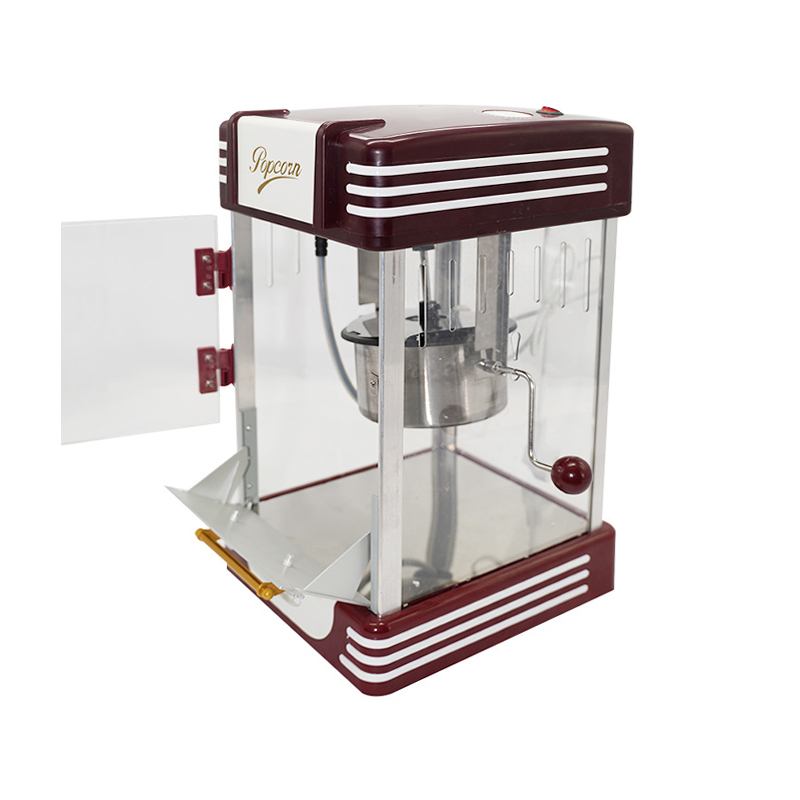 PC Commercial Popcorn Machine Model PM-2808 European plugCommercial popcorn machine Model PM-2808 European plug 320W, 3-5 minutes Once Capacity 570ML with oil and sugar CE/ROHS/LFGB Certification and Test ReportView Product →
At our factory, we produce both lines side by side. The same popping principle is packaged as a 1200W family machine or as a polycarbonate-bodied commercial unit, with CE-certified models and European plug configurations for our export markets. For importers, brands, and retailers, these machines can also be adapted to your own market through our Customize & Design service, from housing colors and materials to plugs and packaging.
Final Thoughts from the Factory Floor
A popcorn machine is one of those rare appliances where simple physics and honest engineering meet. Heat the sealed, moist kernel past its breaking point, and it does the rest by itself; the machine's whole job is to deliver that heat evenly, safely, and batch after batch. Keep your kernels fresh, load the correct portion, and give the machine a quick clean once it cools, and it will reward you for years. That attention to detail, in the factory and in your kitchen, is what turns a handful of hard seeds into a bowl worth sharing.