 English
 中文简体
中文简体 عربى
عربى Español

Most cat owners only think about a water fountain after they notice the same pattern: the water bowl barely dips over a full day, and the vet starts asking about kidney health. The fix is simpler than it looks. An electric pet water fountain keeps water moving at all times so your cat drinks more, and it does that with a compact recirculation loop: a pump pushes water upward, the water flows over the top surface, and a filter cleans it before the cycle starts again. Knowing how that loop works makes setup a ten-minute task and helps you troubleshoot problems before they become costly.
The Core Principle: A Continuous Recirculation Loop
Every electric pet water fountain, whatever the brand, works on the same idea: water is lifted to the top of the fountain, allowed to cascade down, and then pulled through a filter before it recirculates. A submersible pump in the reservoir drives water up a riser tube to the fountain head. As the water falls, it mixes with air, which adds oxygen and helps keep the taste fresh. When the water returns to the reservoir, it passes through a foam and activated carbon filter on its way back to the pump intake. Typical home fountains have a flow rate between 40 and 80 liters per hour and a reservoir of 1.5 to 3 liters, which is enough for one or two cats to drink from comfortably. This constant motion is the whole point: stagnant water loses oxygen, collects dust, and develops a flat taste, while moving water stays fresher between cleanings.
Main Components of an Electric Cat Water Fountain
Knowing the parts is what makes setup and troubleshooting easy. A typical fountain contains five main components, and each one directly affects water quality and reliability.
| Component | Function | What to check |
|---|---|---|
| Submersible pump | Draws water from the reservoir and pushes it up the riser tube | Runs quietly, delivers a steady flow, no air trapped |
| Riser tube | Carries water from the pump to the top of the fountain | Connects firmly to the pump outlet and stays in place |
| Fountain head | Shapes the falling stream and creates aeration | Smooth surfaces, easy to remove and wipe clean |
| Filter (foam and activated carbon) | Traps hair and debris, absorbs chlorine and odors | Not torn; replaced every 2 to 4 weeks |
| Reservoir | Stores the water, typically 1.5 L to 3 L for cat models | No cracks; water level always above the pump |
The pump is the only moving part and the most common failure point. A weak pump can stop because of airlock, where trapped air blocks the impeller chamber, or simply overload because the water level dropped too low. That is why pump quality is the first thing we inspect in our factory, and why the pump cover and impeller should be detachable for cleaning. On the electrical side, most models run on a low-voltage adapter (commonly 5 to 12 V DC) and draw only 2 to 5 W, so the fountain can run continuously for pennies a day.
Why Moving Water Works Better for Cats
Cats prefer moving water for an instinctive reason, not a marketing one. In the wild, running water is less likely to be contaminated than a still puddle, and that preference is still hardwired into domestic cats. A cat that drinks more is less likely to develop urinary crystals and chronic kidney disease, two of the most common feline health problems. The aeration in a fountain also improves taste, because moving water absorbs more oxygen and lets chlorine dissipate faster. One detail many owners overlook is noise: a rattling pump makes sensitive cats avoid the fountain completely, so manufacturers spend real effort on impeller balance and vibration damping. You can read about how pet water fountains are engineered for quiet operation if you want to know what separates a silent model from a noisy one.
How to Set Up an Electric Cat Water Fountain, Step by Step
Once you recognize the parts, assembly is almost the same on every model: clean, assemble, fill, and power on. Most fountains take less than ten minutes to set up, even on the first attempt.
1. Unpack and identify every part
Lay the pump, riser tube, reservoir, fountain head, filter, and power adapter on a dry towel. Check them against the instruction sheet so you know which piece sits on top and where the pump intake is located. Taking this minute now prevents assembly mistakes later.
2. Rinse all parts, but never use soap on the pump
Rinse the reservoir, fountain head, and riser tube with tap water. If you need to sanitize, use a light vinegar solution and rinse thoroughly. Do not use dish soap on the pump: soap residue gets trapped inside the impeller chamber, is nearly impossible to flush out completely, and creates foam that makes a cat refuse the water. This is the most common setup mistake we see in reviews and after-sale questions.
3. Install the pump and connect the riser tube
Connect the riser tube to the pump outlet, then place the pump flat on the bottom of the reservoir. The pump cover should stay below the minimum water level line. Let the pump chamber fill with water before you switch on the power, which prevents a dry start and extends pump life.
4. Insert the filter and fill the reservoir
Rinse the filter briefly under cold water before first use, then slide it into the filter slot or place it over the pump intake. Fill the reservoir with room-temperature water and leave about a quarter inch between the water surface and the rim. If you fill to the very top, water can overflow when your cat drinks.
5. Power on and test the water flow
Connect the low-voltage adapter and switch the fountain on. Watch one full cycle: water should flow smoothly over the fountain head and back into the reservoir. If nothing comes out within a few seconds, switch it off, lift the pump slightly, and tilt it to release trapped air, then restart. If your model has an adjustable flow knob, start at a gentler setting and increase later.
6. Let your cat adjust gradually
Place the fountain next to the old water bowl for the first two days instead of removing the bowl right away. Some cats are suspicious of new sounds and surfaces. Keep the old bowl available, let the moving water catch the cat's attention, and most cats will switch within a day or two.
Cleaning and Filter Replacement Schedule
Maintenance is what keeps a fountain hygienic, and the schedule below is a practical starting point. If you have more than one cat, shorten the intervals.
- Check the water level daily and top it up; moving water evaporates noticeably faster than water in a bowl.
- Rinse the foam pre-filter and wipe down the fountain head once a week.
- Replace the activated carbon filter every 2 to 4 weeks. A soaked, gray filter is also a sign that it is time.
- Descale the reservoir and pump chamber every 1 to 3 months with citric acid or white vinegar, then rinse thoroughly.
- Never use soap on the pump or on any part that you cannot rinse completely.
Most owners see the difference in the cat's water intake within the first few weeks, which makes the routine worth it. For a deeper breakdown, the complete electric pet water fountain maintenance guide covers each step in more detail.
What to Look For When Buying a Cat Water Fountain
Because the pump is the part most likely to fail, pump design and material quality matter more than the styling. Keep these points in mind before you buy.
- Material: stainless steel is easier to keep hygienic and lasts longer; food-grade, BPA-free plastic is lighter and less expensive.
- Noise: choose a model rated below roughly 40 dB. Cats have far more sensitive hearing than we do.
- Flow control: an adjustable flow helps a cautious cat get used to the fountain gradually.
- Filter cost: check the price of replacement filters, because that is the real running cost of the fountain.
- Safety: look for a low-voltage DC adapter, CE or equivalent certification, and no exposed wiring near the water path.
From a production standpoint, the difference between a fountain that lasts two years and one that lasts two weeks is usually the pump. That is why the electric pet water fountain we build uses a submersible pump with a detachable impeller cover and a replaceable filter, so cleaning does not require a new unit.
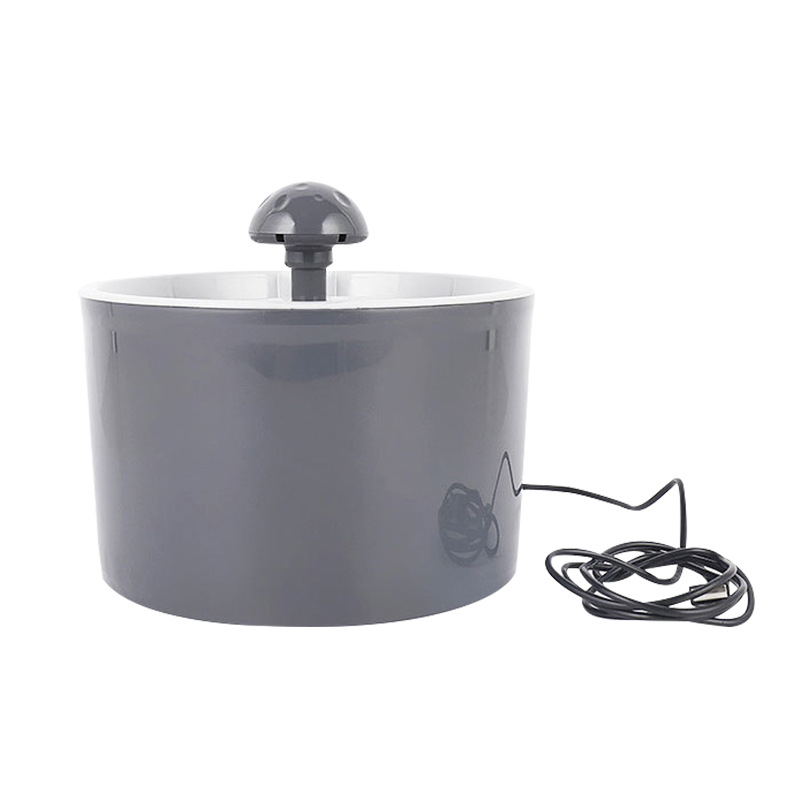 OEM/ODM Electric Pet Water Fountain Manufacturers, SuppliersAs China Electric Pet Water Fountain manufacturers and Electric Pet Water Fountain suppliers, Cixi Xinpu Jianke Electric Appliance Factor...View Product →
The Bottom Line
A cat water fountain works on the same principle whether it is a basic plastic model or a stainless steel one: pump water upward, let it fall, filter it, and repeat. Setup is a five-step process: rinse, assemble, fill, power on, and let your cat adjust. The two habits that keep it running are replacing the filter every few weeks and never cleaning the pump with soap. If you are sourcing fountains for a retail line or a private label, we manufacture them at our own factory and support custom design; you can review our customize and design service to see how we adapt products for different markets.