 English
 中文简体
 عربى
 Español


Popcorn is a simple snack, but the machine that makes it collects a surprising amount of mess: oil that films the kettle, sugar dust that drifts into every corner, and stray kernels that hide beneath the drawer. Left alone for a week, that residue starts to smell, and the next batch tastes faintly of it. We build popcorn machines for a living, and the most common question we hear from new owners is a practical one: how to clean a popcorn machine without damaging it. The routine below is the one we recommend to families, kiosk operators, and cinema staff alike.
Why Cleaning Matters More Than You Think
Popcorn machines are forgiving, but they are not self-cleaning. A thin layer of oil left on a kettle will turn rancid within days, and once that happens every batch carries a stale, slightly bitter note that no amount of butter can hide. Sugar-based residue is worse, because it hardens into a glassy film that scorches the next time the element heats up.
There are practical consequences too:
- Blocked vents and dust-clogged fans make the motor work harder and shorten its life.
- Caramelised sugar on the kettle plate reduces pop yield, so you get more old maids from the same scoop of kernels.
- Moisture trapped against steel or aluminium invites corrosion, especially in coastal or humid climates.
- Leftover crumbs attract insects and pantry pests far more reliably than an open bag of kernels ever would.
None of this requires industrial equipment. Ten focused minutes after each batch, plus a slightly longer session once a week, keeps a machine running the way it did on day one.
What You Will Need Before You Start
Gather everything first so you are not rummaging through cupboards with oily hands:
- Two or three soft microfiber cloths
- Mild dish soap and warm water
- A non-abrasive sponge and a small bottle brush or soft toothbrush
- White vinegar for dissolving sugar and mineral film
- Paper towels for a final dry pass
- A food-safe sanitising spray, if your local rules call for one
- A small hand vacuum or dry brush for loose kernels and hulls
What you should not use: steel wool, scouring pads, oven cleaner, or any solvent-based degreaser. These scratch coated kettles, dull acrylic panels, and leave chemical traces that end up in your popcorn.
The Everyday Clean: Ten Minutes After Every Batch
Consistency beats intensity here. A quick wipe-down while the machine is still slightly warm does most of the work, because oil and sugar have not yet had time to set.
- Unplug and cool. Switch off at the wall and let the machine rest for 20 to 30 minutes. Cleaning a hot kettle risks burns and can warp coated surfaces.
- Empty the drawer. Tip out leftover kernels and shake the crumb tray over the bin, then wipe it with warm soapy water.
- Wipe the kettle. Use a damp cloth with a drop of dish soap. Wipe in circles, then follow with a clean damp cloth and dry immediately. Never submerge a kettle with an attached motor or wiring harness.
- Clean the cabinet floor. Crumbs and unpopped kernels collect under the kettle. Vacuum them out rather than brushing them into the corner.
- Do the lid and chute. These are the parts people forget, and they are usually the greasiest. A bottle brush reaches inside the chute nicely.
- Dry everything completely. Reassemble only once every surface is dry to the touch.
If your machine has a transparent PC box, treat that panel gently. Warm water and a soft cloth are enough; hot water or dishwashers can cloud the material over time.
 PC Transparent Box Popcorn Machine PM-1201The PM-1201 pairs a transparent PC box with 1200W popping and 270ML capacity, making buildup visible and routine wiping easier.View Product →
Models with a clear viewing box like this one are popular precisely because you can see the mess building up, which makes the daily wipe feel less like a chore.
The Weekly Deep Clean
Once a week, or after any heavy session such as a party or a busy weekend, give the machine a proper going-over.
- Disassemble what comes apart. Remove the kettle, drawer, lid, and any removable trays.
- Soak the greasy parts. Fill a sink with warm water, a few drops of dish soap, and a splash of white vinegar. Let parts sit for ten minutes.
- Brush the burnt spots. Use the soft brush on caramelised sugar or dark oil rings. If a spot resists, soak it longer instead of scrubbing harder.
- Wipe the heating plate and kettle base. A cloth dampened with vinegar water lifts polymerised oil film effectively. Dry straight away.
- Check the stirring mechanism. On machines with a stirring rod or pins, wipe away sugar build-up so the mechanism turns freely.
- Wipe the exterior. A damp cloth is enough for painted or PP shells. Avoid letting water run into seams or near switches.
- Air dry fully before storage. Reassembling a damp machine is the quickest way to grow a musty smell.
Cleaning a Hot-Air Popper: Different Rules
Hot-air machines skip the oil, which makes them easier in one way and trickier in another. There is no grease to cut, but starch dust and papery hulls cling to the chamber walls through static, and if you ignore them they bake onto the heating element.
- Unplug the machine and let it cool completely, since the chamber gets very hot.
- Lift off the top cover, chute, and measuring cup, and wash those parts in warm soapy water.
- Tip out loose hulls, then wipe the popping chamber with a barely damp cloth. Never pour or spray water into the air outlet.
- For a hazy starch film, wipe with a cloth dipped in a 1:1 vinegar and water solution, then dry thoroughly.
- Brush the vents and air intake free of dust so airflow stays consistent.
Because there is no oil to go rancid, a hot-air machine can go a little longer between deep cleans, though a quick wipe after each use is still the smart habit. Our own guide to cleaning and maintaining a hot-air popcorn maker covers the finer details if you want to go deeper.
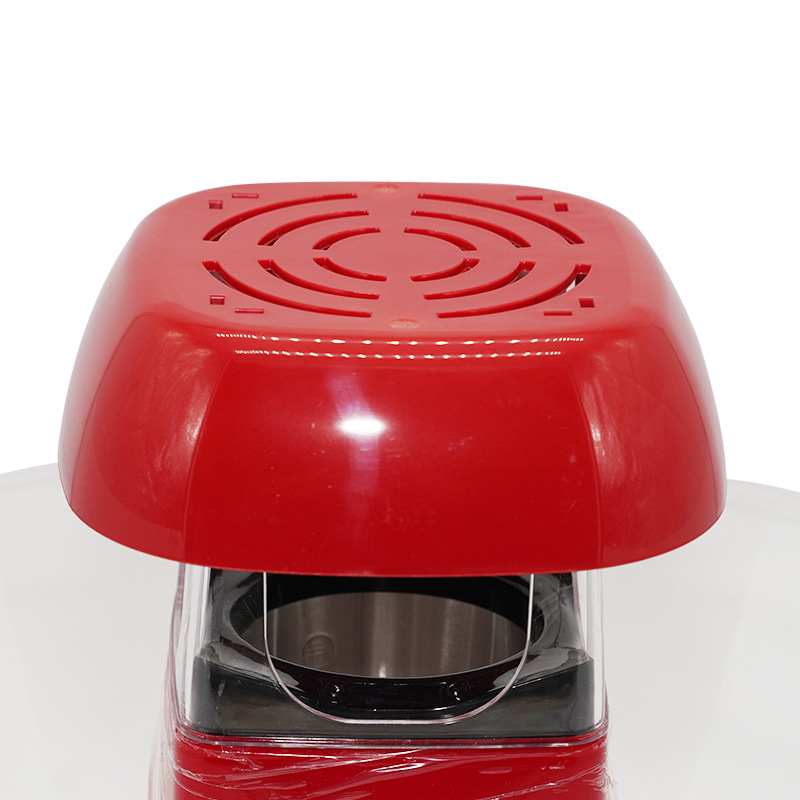 Health No Oil Hot Air Popcorn Machine PM-1208This oil-free hot-air model uses 1200W power and a 270ML chamber, supporting light routine wiping between uses for home gatherings.View Product →
Oil-free designs like this one reward exactly this kind of light, frequent maintenance, and they tend to stay odour-free for years when the chamber is wiped down regularly.
Commercial Poppers: A Closing Routine That Saves Your Mornings
In a shop, cinema, or kiosk, the machine often runs for hours. Cleaning at the end of the day is far easier than cleaning the morning after, when oil has cooled into a sticky film.
- Switch off and allow the kettle to cool while you close down the rest of the counter.
- Dump remaining kernels into the waste bin, not back into the storage container.
- Wipe the kettle interior with a food-safe degreaser, then with clean water and a dry cloth.
- Empty and wash the dump drawer and crumb tray.
- Clean the glass panels on both sides so customers see fresh popcorn, not smears.
- Wipe down the exterior with a stainless-safe cloth, working with the grain.
- Sanitise handles, scoop, and serving surfaces, and leave the kettle lid propped open overnight so moisture can escape.
Weekly, take the extra step of a vinegar soak for the kettle and a check of the stirring motor and fan filter. If your operation runs different models or needs a cleaning-friendly layout, our custom design service can adapt components to suit your workflow.
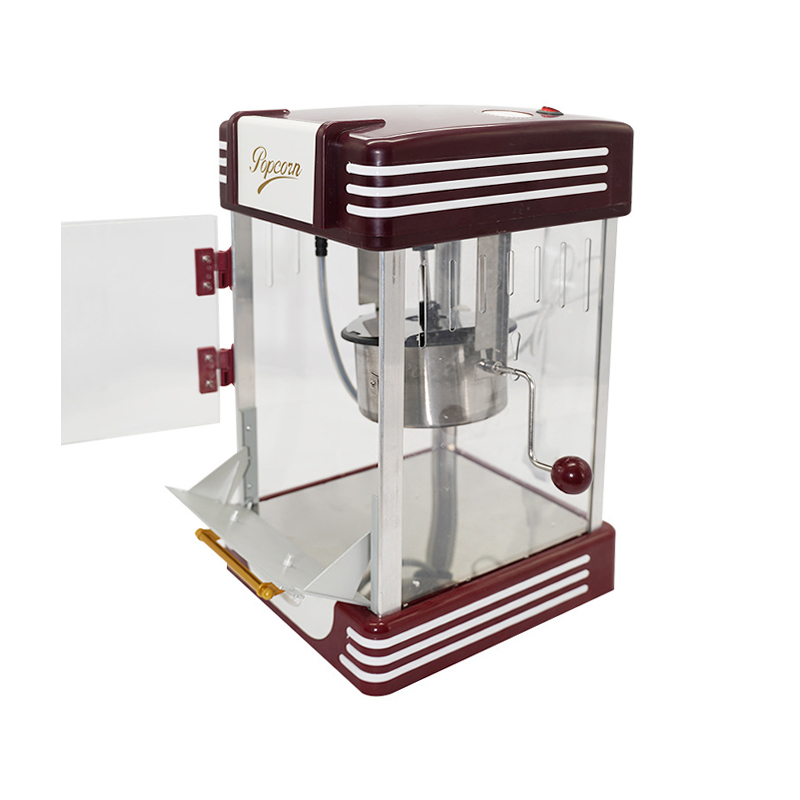 PC Commercial Popcorn Machine PM-2808A classic red commercial popper with 320W power and 570mL batch capacity, suited to cinemas, snack stands, and other high-volume settings.View Product →
On a high-volume commercial unit, a removable kettle and a wide dump drawer make the nightly routine noticeably shorter.
A Cleaning Schedule You Can Actually Keep
Rather than remembering everything, pin a simple rhythm to the machine itself. The table below is the one we suggest to both households and small venues.
| Task | How Often | What to Use |
|---|---|---|
| Wipe kettle interior | After every batch | Damp cloth, one drop of mild soap |
| Empty crumb tray and drawer | After every use | Warm soapy water, dry cloth |
| Wipe cabinet, glass, and lid | Daily | Soft cloth, warm water |
| Deep clean kettle and removable parts | Weekly or every 10 to 15 batches | Vinegar and water soak, soft brush |
| Clear vents, fan filter, and air intake | Monthly | Dry brush, hand vacuum |
| Descale heating plate and chamber | Monthly | White vinegar solution |
| Full inspection of seals and wiring | Every six months | Visual check only |
Mistakes That Do More Harm Than Good
- Submerging the electrical base. Water reaches the motor and wiring and the machine may never run properly again.
- Cleaning while hot. Coated surfaces can warp, and the risk of burns is real.
- Reaching for abrasives. Steel wool and scouring cream leave permanent scratches that trap even more oil next time.
- Using oven cleaner. It is far too aggressive for a food-contact kettle and leaves residues you cannot fully rinse away.
- Storing the machine wet. Trapped moisture is the leading cause of musty smells and rust spots.
- Forgetting the filter and vents. A dusty intake quietly overheats the motor over months of use.
Cleaning a popcorn machine is not a complicated job, and it does not need a shelf of specialist products. Warm water, mild soap, a splash of vinegar, and a soft cloth handle almost everything. What matters is timing: wipe while the residue is fresh, deep clean before the build-up becomes visible, and always let every part dry before it goes back together.
Do that, and your machine will keep producing light, crisp popcorn with a clean, sweet smell for years. It is one of the small maintenance habits that pays back generously, one movie night at a time.