 English
 中文简体
中文简体 عربى
عربى Español

The amount of oil you put in a popcorn machine depends directly on the kettle size: a standard home popcorn machine using a 4–6 oz kettle needs about 1–2 tablespoons (15–30 ml) of oil per batch, while a commercial popcorn machine with an 8 oz kettle uses approximately 3 tablespoons (45 ml), and larger 12–16 oz commercial kettles require 4–6 tablespoons (60–90 ml). Using too little oil causes burning and uneven popping; using too much makes popcorn greasy and can damage the kettle over time. Getting this ratio right is the single most important factor in producing light, fully popped, theater-quality popcorn consistently.
Oil-to-Kernel Ratios by Kettle Size
The universally accepted ratio for popcorn machines is approximately 1 tablespoon of oil per 2 oz of popcorn kernels. This ratio holds across virtually all kettle sizes and machine types — from compact home countertop units to large commercial floor-standing machines. The table below translates this into practical measurements for the most common kettle sizes:
| Kettle Size | Kernels per Batch | Oil Required | Typical Use |
|---|---|---|---|
| 4 oz | ½ cup (4 oz / 113 g) | 2 tbsp (30 ml) | Home / small family |
| 6 oz | ¾ cup (6 oz / 170 g) | 3 tbsp (45 ml) | Home / small venue |
| 8 oz | 1 cup (8 oz / 227 g) | 4 tbsp (60 ml) | Small commercial / concession |
| 12 oz | 1½ cups (12 oz / 340 g) | 6 tbsp (90 ml) | Commercial / busy venue |
| 16 oz | 2 cups (16 oz / 454 g) | 8 tbsp (120 ml) | High-volume commercial |
Note that these measurements assume standard coconut oil or canola oil. If you are using a pre-measured popcorn kit (kernel + oil + salt combined in a single bag), follow the kit's instructions — the oil is already portioned and adding more will result in a greasy product.
Oil Amounts for Home Popcorn Machines
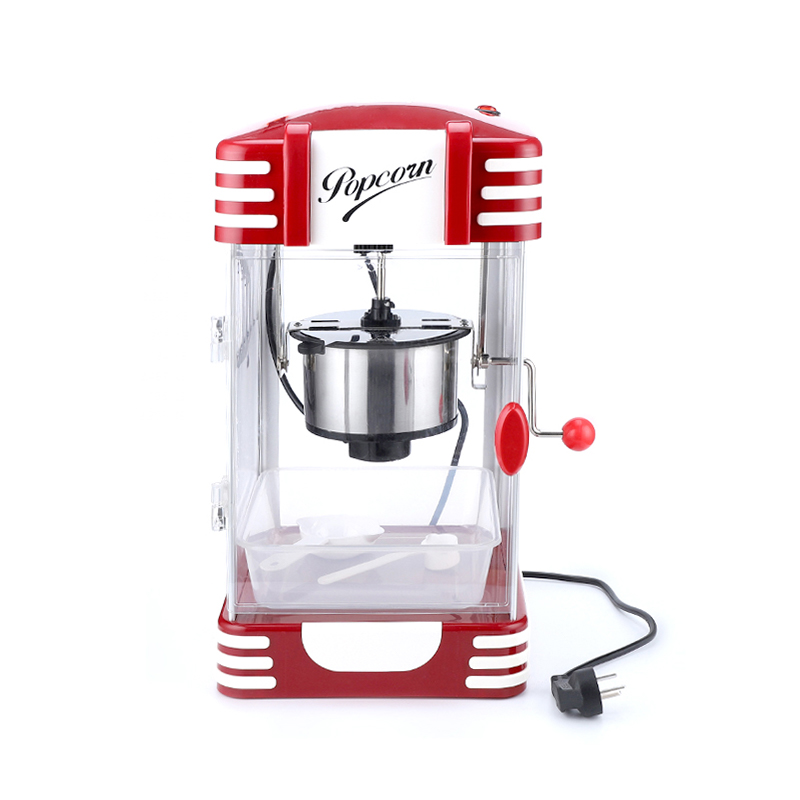
Home popcorn machines typically use 4 oz or 6 oz kettles and are designed for batch sizes of 10–15 cups of popped popcorn — enough for 2–4 people. The smaller kettle means less thermal mass, so the machine reaches popping temperature faster but is also more sensitive to oil quantity errors.
Practical Oil Guidance for Home Use
- 4 oz home kettle: Use exactly 2 tablespoons (30 ml) of oil. This is the most common home machine size — found in brands like Great Northern, Nostalgia, and Cuisinart.
- 6 oz home kettle: Use 3 tablespoons (45 ml) of oil. Many home machines in this size include a measuring cup or scoop — use it rather than estimating by eye.
- Healthier option: You can reduce oil to as little as 1 tablespoon per 4 oz of kernels, but expect slightly lower pop rates (up to 15% more unpopped kernels) and less even coating.
- Never exceed the maximum fill line marked inside the kettle — overfilling with oil causes spattering, smoke, and can damage the heating element.
For home machines, coconut oil is the most popular choice because it produces a flavor closest to movie theater popcorn. Refined coconut oil has a smoke point of 232°C (450°F), well above the typical kettle operating temperature of 175–200°C, making it safe and stable for this application.
Oil Amounts for Commercial Popcorn Machines
Commercial popcorn machines — used in cinemas, stadiums, carnivals, and food service venues — operate with 8 oz, 12 oz, or 16 oz kettles and are built for continuous, high-volume production. An 8 oz commercial machine produces approximately 24–30 cups of popped popcorn per batch, while a 16 oz machine yields 48–60 cups.
Oil Measurement in Commercial Settings
In commercial operations, consistency is critical — both for product quality and for managing food cost. Most commercial operators use one of three approaches:
- Pre-measured popcorn kits: Packets containing a pre-weighed combination of kernels, coconut oil, and salt — designed for specific kettle sizes (e.g., Gold Medal 8 oz kits for 8 oz kettles). Zero measuring required; ideal for high-turnover venues with untrained staff.
- Measured dispensing: A calibrated ladle or pump dispenser delivers the exact oil volume per batch. Standard practice in larger cinemas where bulk oil (typically in 50 lb blocks of coconut oil) is used.
- Timed pump systems: Some commercial machines have integrated oil pumps that dispense a fixed volume per activation — eliminating human measurement error entirely.
Commercial Oil Standards
The cinema industry standard is Flavacol-seasoned coconut oil — a combination of coconut oil and the yellow cheddar-flavored salt seasoning that gives theater popcorn its distinctive taste and color. The standard commercial ratio used by most U.S. cinema chains is 3 oz of oil per 8 oz of kernels (approximately 1:2.7 oil-to-kernel ratio by weight), which produces a richer, more coated product than home use.
Best Oils for Popcorn Machines and How They Affect Quantity
The type of oil you choose affects not just flavor and health profile, but also how much you should use. Oils with different viscosities and smoke points behave differently in a kettle, and some require slight quantity adjustments:
| Oil Type | Smoke Point | Flavor | Best For | Quantity Adjustment |
|---|---|---|---|---|
| Refined Coconut Oil | 232°C (450°F) | Neutral / buttery | Home and commercial | Standard ratio |
| Canola Oil | 204°C (400°F) | Neutral | Health-conscious home use | Standard ratio |
| Sunflower Oil | 227°C (440°F) | Light / neutral | Home and light commercial | Standard ratio |
| Clarified Butter (Ghee) | 252°C (485°F) | Rich / buttery | Premium home use | Reduce by 10–15% (richer coating) |
| Olive Oil (Light) | 216°C (421°F) | Mild / slightly fruity | Home use only | Standard ratio; avoid extra-virgin |
| Regular Butter | 150°C (302°F) | Strong buttery | Not recommended | Burns easily; use ghee instead |
Avoid extra-virgin olive oil, unrefined coconut oil for high-heat use, and regular butter in popcorn machine kettles. Their low smoke points cause burning, off-flavors, and residue buildup that is difficult to clean and can permanently stain aluminum kettles.
What Happens When You Use the Wrong Amount of Oil
Both too much and too little oil cause distinct, recognizable problems. Understanding these symptoms helps diagnose and correct oil measurement errors quickly:
Too Little Oil
- High percentage of unpopped kernels ("old maids"): Without sufficient oil to conduct heat evenly to each kernel, pop rates drop. Properly oiled batches should have fewer than 2% unpopped kernels — excess "old maids" almost always indicate under-oiling or a heating issue.
- Burnt or scorched popcorn: Insufficient oil means direct metal-to-kernel contact at the hottest points of the kettle, causing burning before full moisture expansion occurs.
- Dry, hard texture: Popcorn that lacks proper oil coating feels dry, sticks in the throat, and has noticeably less flavor even when seasoned afterward.
Too Much Oil
- Greasy, heavy popcorn: Excess oil saturates the popped kernel shells, producing an unpleasant mouthfeel and leaving grease on hands and containers.
- Smoke and residue buildup: Excess oil that doesn't coat kernels pools at the bottom of the kettle, overheats, and smokes. Over time this creates carbonized residue that is very difficult to remove and imparts a stale, rancid flavor to future batches.
- Reduced pop volume: Waterlogged kernels in excess oil pop to a smaller size because the steam pressure is partially suppressed by the surrounding liquid.
- Kettle and machine damage: Excess oil splashing onto heating elements or electrical components can cause short circuits and void warranties on both home and commercial machines.
Step-by-Step: How to Add Oil Correctly to a Popcorn Machine
Following the correct loading sequence ensures even heating, complete popping, and easy cleanup. The process is the same for both home and commercial machines — only the quantities differ:
- Preheat the empty kettle: Turn the machine on and allow the kettle to reach operating temperature for 3–5 minutes before adding any ingredients. A cold kettle with oil added first can cause the oil to overheat unevenly.
- Add the measured oil first: Pour the correct oil amount (based on your kettle size) into the preheated kettle. If using solid coconut oil, add it and wait 30–60 seconds for it to fully melt and coat the kettle bottom before adding kernels.
- Add kernels immediately after oil is liquid: Pour the measured kernels into the oil. The kernels should sizzle lightly on contact — this confirms the oil is at the correct temperature (~175°C). No sizzle means the oil is too cool; heavy smoking means it is too hot.
- Add salt or seasoning on top of the kernels: If using Flavacol or a similar seasoning salt, add it at this stage — not after popping. This allows the salt to bind to the oil coating during the popping process for even flavor distribution.
- Close the kettle lid and monitor: Most kettles take 2–4 minutes to complete a batch. When popping slows to less than one pop every 2–3 seconds, the batch is done. Open the kettle door to release the popcorn and turn off the heating element promptly to prevent residual burning.
- Clean the kettle after each session: Wipe residual oil from the kettle while still warm using a food-safe cloth or paper towel. Hardened oil residue from skipped cleanings is the leading cause of off-flavors and reduced machine lifespan.
Tips for Reducing Oil Without Sacrificing Popcorn Quality
If you want lighter popcorn without the full oil quantity, there are several approaches that reduce oil content while maintaining acceptable pop rates and flavor:
- Reduce to 1 tbsp per 4 oz of kernels: This is the minimum effective amount for a kettle machine. Expect a slightly drier product and up to 10–15% more unpopped kernels, but no burning if the kettle temperature is correct.
- Use a high-quality oil with good thermal conductivity: Refined coconut oil and clarified butter coat kernels more efficiently than liquid vegetable oils, meaning you may achieve good results with slightly less volume.
- Apply post-pop butter spray separately: Use the standard oil amount during popping for optimal pop rate, then apply a light spray of butter-flavored oil after popping for flavor without adding oil to the kettle process.
- Do not substitute water or broth: Some home cooks attempt to replace oil with water-based liquids in countertop popcorn machines — this will damage the heating element and produce steam that rusts internal components. Kettle machines are designed exclusively for oil-based popping.